
Insights
‘Shift the conversation from cost metrics to business impact metrics’
Next in the ongoing series of Reverse bidding in OOH, Sanchit Bhan, Founder and CEO, PDSN Media, examines the impact of reverse auctioning on pricing discipline, innovation, campaign quality, and the future of value-based buying in OOH.

Has reverse auctioning commoditised OOH inventory? Yes, reverse auctioning has commoditised a meaningful portion of Out-of-home advertising inventory, especially lower-differentiation OOH inventory however the highest-value OOH assets remain resistant to commoditisation because they retain scarcity, status, or contextual power. E.g. iconic landmark sites, dominant transit hubs, Tier 1 Airport media, data-rich retail media integrations, experiential or unique 3D installations.
In a reverse auction, media owners compete downward on price to win advertiser demand. Price becomes the dominant signal: Instead of “Which site best fits the brand?”, the question becomes “Which screen delivers the cheapest reach?”
Yield pressure increases: Media owners often discount unsold inventory aggressively to maintain occupancy, reinforcing downward pricing expectations.
What happens to premium inventory?
To some extent reverse auction has as impact on premium inventory valuation however most of the high-value OOH assets remain resistant to impact as they offer premium audience, status or contextual power.
There is a huge impact on the pricing discipline when it comes to smaller premium inventory because of the reverse auction there is a significant drop in the pricing for these smaller premium inventories and once the low price is locked with the client getting the sites resold at their higher initial rates becomes tougher.
The growing pressure on media owners
In many digital and traditional media buying environments, advertisers or agencies use procurement-led processes where media owners compete mainly on price.
A reverse auction means: Buyers set the demand, multiple media sellers compete downward on rates, The lowest-cost acceptable option often wins (L1).
For media owners this creates pressure such as: Falling rates, commoditization of inventory, reduced ability to charge premiums for quality audiences or content, margin compression.
What needs to change?
We should move from “discussion” to “collective market correction.” Reverse auctioning survives because every stakeholder benefits in the short term while the ecosystem loses in the long term.
The next step should be stronger media pricing by premium publishers, industry-wide quality benchmarks, outcome-based measurement instead of impression-led buying and greater transparency around viewability, attention, and brand safety.
The next step needs to be taken collectively by media owners/publishers, agencies, brands and marketers.
Media owners and publishers must stop treating inventory as a pure commodity. If quality publishers continue to undercut each other for short-term volumes, the market will keep rewarding the cheapest option instead of the most effective one.
Agencies and trading teams need to evolve KPIs beyond lowest CPMs and cheapest reach. Procurement-led media buying has to be balanced with effectiveness-led planning.
Brands and marketers must recognize that low-cost inventory often creates hidden inefficiencies: poor attention, weak engagement, unsafe environments and lower business outcomes.
Unless the ecosystem collectively agrees that “cheap reach” is not equal to “effective reach” reverse auctioning will continue.
Ultimately, media owners define the perceived value of their inventory. When premium publishers repeatedly discount pricing to win budgets, they unintentionally signal that differentiation does not matter. Over time, the market stops valuing: audience trust, contextual relevance, premium environments and attention quality.
But while media owners do carry responsibility, expecting them alone to solve the issue is unrealistic. If buyers continue rewarding the lowest cost irrespective of quality, media owners will naturally respond to that incentive.
The healthier approach is a shared commitment where media owners protect quality, agencies advocate effectiveness and brands reward outcomes rather than just efficiency metrics.
How can brands understand the value of the medium
The industry must shift the conversation from cost metrics to business impact metrics.
Most reverse auctioning thrives because media is still evaluated heavily on: CPM, CPC and short-term buying efficiencies but premium environments contribute to factors that are harder to quantify immediately: stronger attention, higher trust, better recall and improved conversion quality.
A few approaches that can help:
- Demonstrating studies linking premium environments to stronger brand outcomes.
- Using attention metrics, dwell time, and engagement quality instead of only reach.
- Comparing “cheap impressions” versus “effective impressions.”
- Highlighting hidden costs of low-quality inventory such as fraud, non-viewable ads, and reputational risks.
- Creating case studies where premium placements delivered stronger ROI despite higher upfront costs.
Shifts in the ecosystem
The ecosystem needs both commercial and mindset shifts.
Commercial shifts
- Move from volume-led buying to value-led buying.
- Adopt outcome-based pricing models where possible.
- Build stronger private marketplaces and curated premium ecosystems.
- Reduce dependence on open exchanges that commoditize inventory.
- Introduce stricter quality standards around fraud, viewability, and attention.
Measurement shifts
- Expand measurement beyond CPMs.
- Standardize attention and quality metrics.
- Reward effectiveness, not just efficiency.
- Incorporate brand lift, recall, engagement quality, and business outcomes into evaluation frameworks.
Agency shifts
- Planning teams need greater authority versus pure trading functions.
- Agencies should incentivize long-term effectiveness, not just short-term savings.
- Strategic media thinking must regain importance over algorithmic optimization alone.
Industry shifts
- Need for stronger pricing discipline.
- Premium players may need more collective alignment around value protection.
- Investment in differentiated content, data, and audience experiences becomes critical.
Brand mindset shifts
- Marketing teams need to stop treating media purely as a procurement function.
- The conversation should evolve from “Where can I buy cheapest?” to “Where will my brand perform best?”.
The long-term solution is not eliminating automation or bidding. It is ensuring that quality, trust, effectiveness, and outcomes are weighted as heavily as price in media decision-making.


Daily Newsletter
Subscribe to receive the latest OOH
industry updates

Bombay Shaving Company takes its grooming message to the men’s washroom in PVR

Tinder turns Delhi Metro into a witty dating lesson with contextual OOH campaign

Xtreme Media Appoints Anand Lakshmanan as Chief Business Officer.

Why railway media is getting more attractive to brands

Orient Electric launches Independence Day OOH campaign

Puma becomes PVMA for PV Sindhu

HOCCO’s Aamchi campaign brings mango tree to Ahmedabad

Blinkit in association with Kinetic India goes all Bollywood

Acclaimed Actor Manoj Joshi to deliver an inspirational address at OAC 2024

Zepto’s Fast 10 Minute Delivery Saves the Day for Game Night in Ahmedabad!

‘Let’s create an empathetic space for women’

‘It won’t just be a man’s world anymore’

‘We’re actively exploring acquisitions and working to increase our inventory’

A habit of success at Prakash Arts

‘OOH is an important channel to connect with corporate audiences’


Sales Manager (Amritsar, J&K, Chandigarh, Mumbai, Vadodara, Udaipur, U.P.)
Orango has been involved in creating, building, reviving and growing brands. Orango builds powerful connections with their customers & people...

Sales Executive
Established B2B Media and Events Group VJ Media Works is looking for sales executives
Digital Marketing/Social Media Executives
Established B2B Media and Events Group VJ Media Works is looking for the following: Digital Marketing/Social Media Executives Location: Mumbai/Bangalore...


Sales Manager – AdZ (Digital Advertising)
Estontec Group’s fast-growing adtech brand AdZ is hiring a Sales Manager to drive digital media sales and client growth. This...
Onboarding Specialist
Join Estontec Group’s transit media brand BrandonWheelz as an Onboarding Specialist, managing campaign execution, vendor coordination, and media planning across...


Operation Manager
Company Description: BajuGali an Advertisement Company is a leading firm specializing in advertising and marketing services. We provide innovative solutions...


Senior Copy Editor
No of openings: 1 Experience/ qualifications: 3-4 years in any media/news publication Graduate Degree in any discipline, degree in Journalism...


Sales Specialist at BajuGali (OOH Advertising Company)
At BajuGali, we are a marketing and advertising agency that specializes in transforming creative visions into reality for brands and...


Rare Beauty turns New York billboards into scratch-and-sniff fragrance experience
The campaign is executed in New York City


Samsung and Reliance Digital take Galaxy AI to the streets with illuminated OOH campaign
The campaign is executed by Vibrant Advertising, with Sakshi Advertising serving as the production partner.


SBI General Insurance launches OOH campaign for its Motor and Health Insurance offerings
The campaign is executed by Platinum Outdoor in Mumbai
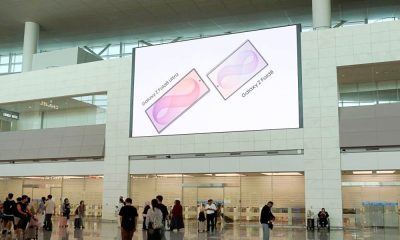

Samsung launches integrated OOH Campaign across South Korea for Galaxy Z Fold8
The campaign is live across Incheon international airport and buses across the South Korea


Siddha Sky spotlights seamless connectivity with OOH campaign in Mumbai
The campaign is executed by Enroute Advertising
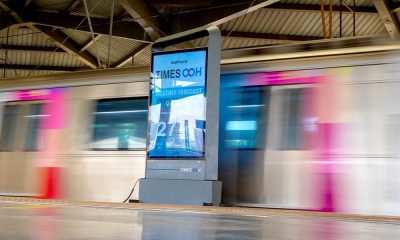

Times OOH upgrades the Media Experience on Mumbai Metro Line 1
The move to 75-inch displays gives brand creatives significantly greater visual impact, while the enhanced brightness ensures vivid, true-to-life imagery...

Broadsign released 2026 programmatic DOOH trends report
Drawing on full-year 2025 and Q1 2026 internal transaction data, the report, surfaces useful signals about what today’s buyers value...
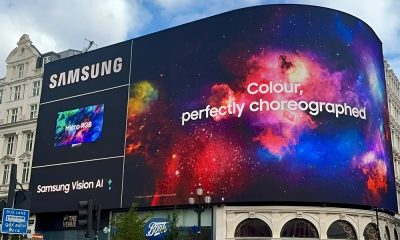

Samsung lights up global landmarks with Micro RGB OOH campaign
The consumer electronics giant has rolled out a large-scale global OOH campaign across some of the world's most iconic digital...
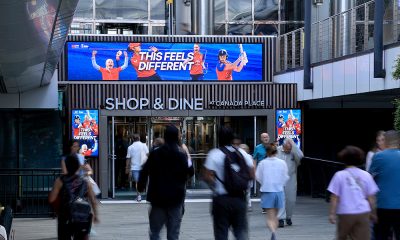

Ocean Outdoor UK retains Canary Wharf DOOH contract
The new and updated programme to include immersive experiences and augmented reality
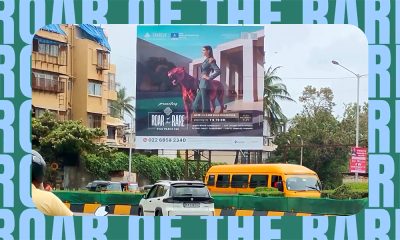

Chandak amplifies ‘Roar of the Rare’ with premium OOH campaign across Mumbai
Executed by MBH, the campaign leveraged RoshanSpace Brandcom's premium outdoor network to create high-impact visibility for the developer's latest luxury...
-
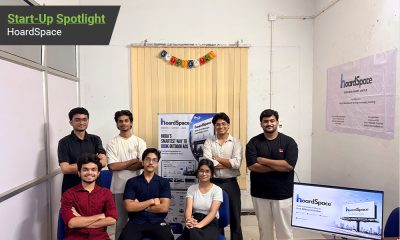
 Company News
How this bunch of students from NIT Rourkela is building an OOH marketplace
-
Creative Concepts
Rare Beauty turns New York billboards into scratch-and-sniff fragrance experience
-

 People
Sahil Gambhir joins Rapport as General Manager – OOH
-
Campaigns
Samsung and Reliance Digital take Galaxy AI to the streets with illuminated OOH campaign