
Insights
Why railway media is getting more attractive to brands
Railway media is moving beyond traditional formats, and Anuj Dev, Founder, InstaWingz Marketing, believes the changing face of Indian railway stations is opening up a new canvas for brands.

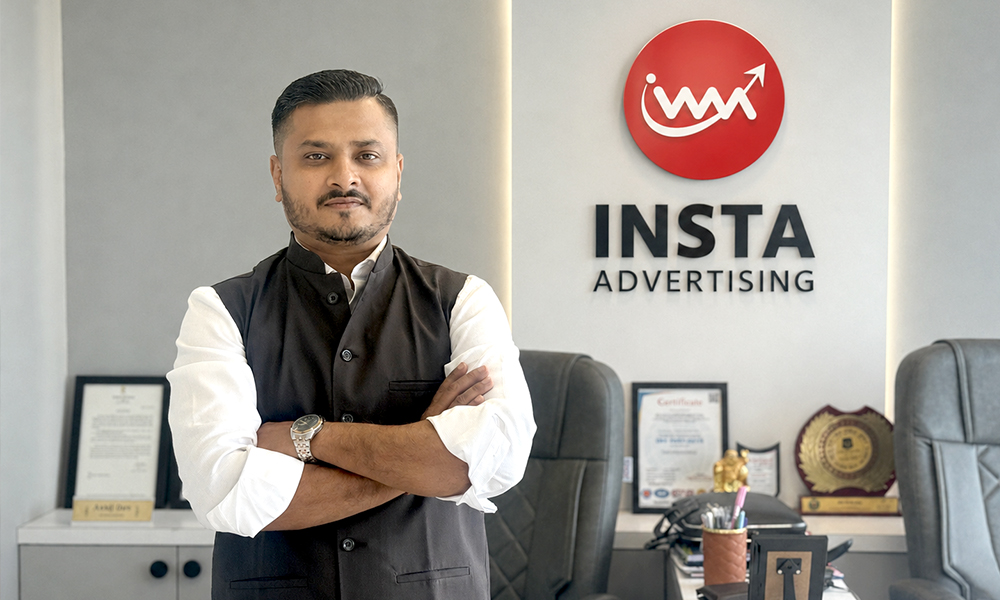
Railway stations have long been one of India’s biggest outdoor advertising platforms, offering brands massive visibility through millions of daily travellers. But the medium is now going through a significant change.
As stations across India are redeveloped into modern transit hubs, railway media is beginning to move beyond its traditional image of large static hoardings and mass reach. For brands, the opportunity is now about visibility, context and ownership of the environment.
According to Anuj Dev, Founder of InstaWingz Marketing, this transformation is opening up a new chapter for railway advertising. “The transformation that is happening today is just the beginning. Stations such as Surat, Gandhinagar, Ayodhya and Varanasi are being redeveloped with world-class infrastructure, and in the process, an entirely new canvas for advertising is being created,” said Anuj.
Railway media is also becoming more targeted. Different stations attract different audiences, creating opportunities for brands to select locations based on their customer profile. For instance, a textile brand advertising at Surat Railway Station can benefit from the city’s strong association with the textile industry.
For InstaWingz, railway media is already at the heart of its business. More than 80 per cent of the company’s portfolio comes from railway media across Gujarat, Andhra Pradesh, Goa, Bihar and Uttar Pradesh. Its network currently includes more than 20,000 sq. ft. of media inventory and nearly 400 assets, covering static formats, LED screens and train media.
Digital is another area where the medium is evolving. While around 80 per cent of InstaWingz’s current inventory remains static, the company is expanding its LED presence. However, Anuj believes the future will not be about replacing traditional formats with digital, but about finding the right balance between both.
“Both formats have their own strengths. The future isn’t about abandoning static and chasing digital. It’s about creating the right balance between the two,” Anuj said.
The company is also experimenting with larger, more integrated formats. At Surat Railway Station, InstaWingz has introduced a gantry advertising format designed to give brands a stronger association with the station itself.
With India’s railway infrastructure modernising, the medium can compete for the premium budgets traditionally associated with airports and other transit environments.
What does this transformation mean for brands, and can railway media become India’s next premium OOH canvas?
Read the full article in the July edition of Outdoor Asia Magazine.


Daily Newsletter
Subscribe to receive the latest OOH
industry updates

Bombay Shaving Company takes its grooming message to the men’s washroom in PVR

Tinder turns Delhi Metro into a witty dating lesson with contextual OOH campaign

Xtreme Media Appoints Anand Lakshmanan as Chief Business Officer.

Orient Electric launches Independence Day OOH campaign

I Squared Capital to acquire oOh!media in A$898 million deal

Puma becomes PVMA for PV Sindhu

HOCCO’s Aamchi campaign brings mango tree to Ahmedabad

Blinkit in association with Kinetic India goes all Bollywood

Acclaimed Actor Manoj Joshi to deliver an inspirational address at OAC 2024

Zepto’s Fast 10 Minute Delivery Saves the Day for Game Night in Ahmedabad!

‘Let’s create an empathetic space for women’

‘It won’t just be a man’s world anymore’

‘We’re actively exploring acquisitions and working to increase our inventory’

A habit of success at Prakash Arts

‘OOH is an important channel to connect with corporate audiences’

Sales Manager (Amritsar, J&K, Chandigarh, Mumbai, Vadodara, Udaipur, U.P.)
Orango has been involved in creating, building, reviving and growing brands. Orango builds powerful connections with their customers & people...

Sales Executive
Established B2B Media and Events Group VJ Media Works is looking for sales executives
Digital Marketing/Social Media Executives
Established B2B Media and Events Group VJ Media Works is looking for the following: Digital Marketing/Social Media Executives Location: Mumbai/Bangalore...

Sales Manager – AdZ (Digital Advertising)
Estontec Group’s fast-growing adtech brand AdZ is hiring a Sales Manager to drive digital media sales and client growth. This...
Onboarding Specialist
Join Estontec Group’s transit media brand BrandonWheelz as an Onboarding Specialist, managing campaign execution, vendor coordination, and media planning across...

Operation Manager
Company Description: BajuGali an Advertisement Company is a leading firm specializing in advertising and marketing services. We provide innovative solutions...


Senior Copy Editor
No of openings: 1 Experience/ qualifications: 3-4 years in any media/news publication Graduate Degree in any discipline, degree in Journalism...

Sales Specialist at BajuGali (OOH Advertising Company)
At BajuGali, we are a marketing and advertising agency that specializes in transforming creative visions into reality for brands and...


Rare Beauty turns New York billboards into scratch-and-sniff fragrance experience
The campaign is executed in New York City
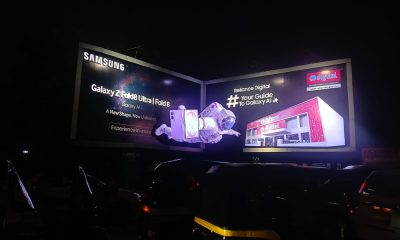

Samsung and Reliance Digital take Galaxy AI to the streets with illuminated OOH campaign
The campaign is executed by Vibrant Advertising, with Sakshi Advertising serving as the production partner.
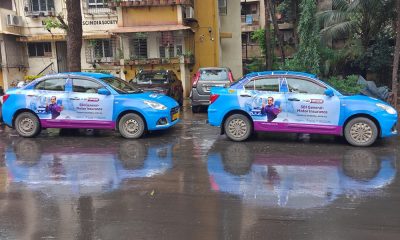

SBI General Insurance launches OOH campaign for its Motor and Health Insurance offerings
The campaign is executed by Platinum Outdoor in Mumbai
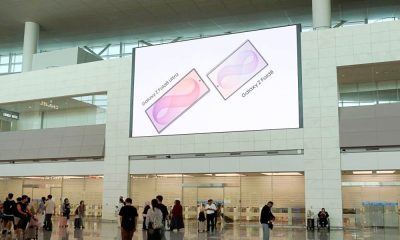

Samsung launches integrated OOH Campaign across South Korea for Galaxy Z Fold8
The campaign is live across Incheon international airport and buses across the South Korea
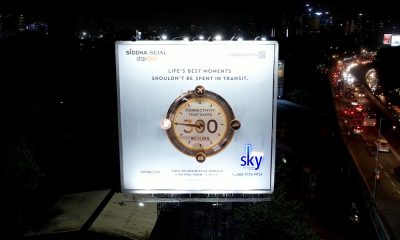

Siddha Sky spotlights seamless connectivity with OOH campaign in Mumbai
The campaign is executed by Enroute Advertising
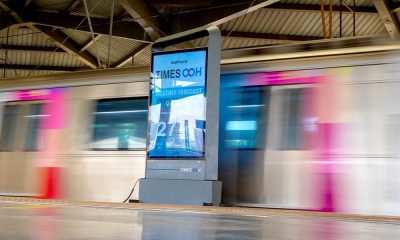

Times OOH upgrades the Media Experience on Mumbai Metro Line 1
The move to 75-inch displays gives brand creatives significantly greater visual impact, while the enhanced brightness ensures vivid, true-to-life imagery...

Broadsign released 2026 programmatic DOOH trends report
Drawing on full-year 2025 and Q1 2026 internal transaction data, the report, surfaces useful signals about what today’s buyers value...
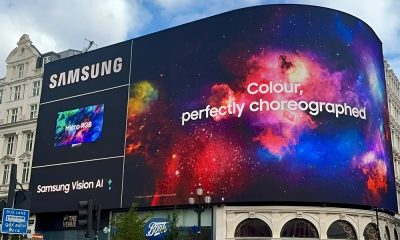

Samsung lights up global landmarks with Micro RGB OOH campaign
The consumer electronics giant has rolled out a large-scale global OOH campaign across some of the world's most iconic digital...

Ocean Outdoor UK retains Canary Wharf DOOH contract
The new and updated programme to include immersive experiences and augmented reality
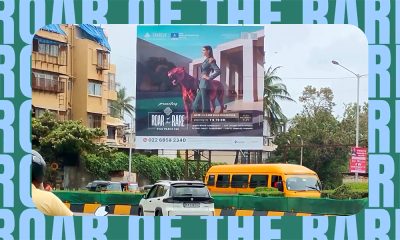

Chandak amplifies ‘Roar of the Rare’ with premium OOH campaign across Mumbai
Executed by MBH, the campaign leveraged RoshanSpace Brandcom's premium outdoor network to create high-impact visibility for the developer's latest luxury...
-
Creative Concepts
Rare Beauty turns New York billboards into scratch-and-sniff fragrance experience
-
 Company News
How this bunch of students from NIT Rourkela is building an OOH marketplace
-

 People
Sahil Gambhir joins Rapport as General Manager – OOH
-
Campaigns
Samsung and Reliance Digital take Galaxy AI to the streets with illuminated OOH campaign